Urban nature walk
Jun. 11th, 2007 03:31 pm![[personal profile]](https://www.dreamwidth.org/img/silk/identity/user.png) magid
magidYesterday I went on a nature walk by the Muddy River and around the Fens. I got to hear many stories and see lots of species I hadn't known/noticed before.
We started at Charlesgate. The Muddy River near the Charles used to be mudflats, sometimes salty before the dam on the Charles (on which the Museum of Science is built) kept the tides from coming upriver. Now it's all freshwater, partly built over, and much less smelly (no longer being used as a trash heap). Still, the snazzy houses around there are built on landfill. There are deep posts to anchor the buildings, but a lowering water table has started exposing some of the wood, so it's more prone to rot. Not great if an earthquake hits.
I kept a running list of what species we found. My (likely somewhat inaccurate) list includes
I had known that earthworms weren't native to New England, since the glaciers had stripped a lot of stuff off the ground and compacted what was left, but I didn't know that they were brought over as ballast: ships used to use dirt as make-weights, and whatever bugs, etc., were in the soil came along too. These days, ships use sea water as ballast, which can contribute to small sea creatures range expanding (such as the invasive zebra mussel). It'd be great if we could use things that were inert instead.
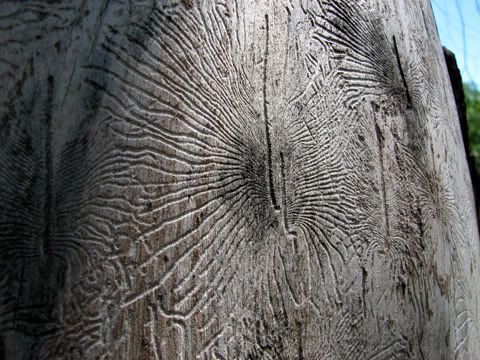
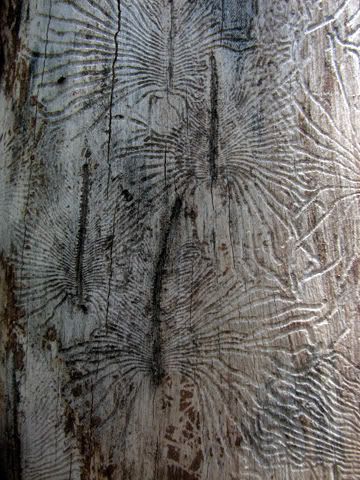
One dead tree had an area of bark missing. There were black line segments on the white wood, with little curving paths carved into the wood spreading out from each. Some kind of beetle laid eggs in a line, and when they hatched, the little ones burrowed out in all directions. I don't know what kind of beetles they were, but the tracks they left were beautifully geometric. (Check it out here and here.)
I've got a pretty good sense of direction, but the Fens always turn me around. Something about the twistiness is just difficult for my inner navigator, despite grokking Massachusetts roads in general. I hadn't realized there's a war memorial there, nor a rose garden. More exploration is needed!
And wholly off topic: happy Loving Day tomorrow!
We started at Charlesgate. The Muddy River near the Charles used to be mudflats, sometimes salty before the dam on the Charles (on which the Museum of Science is built) kept the tides from coming upriver. Now it's all freshwater, partly built over, and much less smelly (no longer being used as a trash heap). Still, the snazzy houses around there are built on landfill. There are deep posts to anchor the buildings, but a lowering water table has started exposing some of the wood, so it's more prone to rot. Not great if an earthquake hits.
I kept a running list of what species we found. My (likely somewhat inaccurate) list includes
- tree of heaven (which are now not supposed to be planted because they're pollinated by flies, so they smell to attract the flies, plus, well, flies)
- downy woodpecker (later, we heard baby ones cheeping from a nest in a dead tree)
- Canada geese with goslings (well, teenagers, really, more than halfway to full grown)
- weeping willow (which is an Asian import, like many other species, happily not invasive)
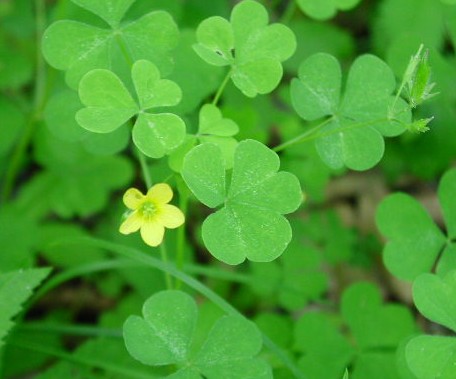
- yellow wood sorrel with the pretty trefoil leaves
- violet (no longer in bloom)
- clover (white, red, and pink, which might be a red-white hybrid)
- plantain, aka white man's footprint (not the tuber; I'm not sure why the name is what it is, though if I'm reading my scribbles correctly, the young leaves are edible, as are the roots in the second year)
- pineapple weed (edible, as a tea, if I'm remembering rightly, though not very pineapple-y)
- black medic
- chicory, aka corn flower (the roots are edible, as are the greens, though they're bitter; the new thing I learned was that the roots can sprout during the winter, if kept indoors; useful centuries ago during the winter when fresh greens were almost impossible to get)
- two pieces of wasp's nest that had fallen from some nest still unfound
- shepherd's purse (edible greens)
- black aphids and green aphids
- dandelion (edible greens)
- honey locust tree (a thornless version; frequently chosen for cities because the compound leaves tend to blow away in the fall without needing work, and because it lets pretty dappled sun through the leaves)
- a variety of grasses, not further identified (though the tour leader did point out that human history is a dance of people and grasses; I could see an interesting history book being written about that)
- Virginia creeper
- mugwort (which grows in inhospitable places, like along train tracks; they have green flowers, which means that they're not attracting insects to be pollinators, but using the wind instead)
- American robin
- European starling
- house sparrow
- burdock (edible roots)
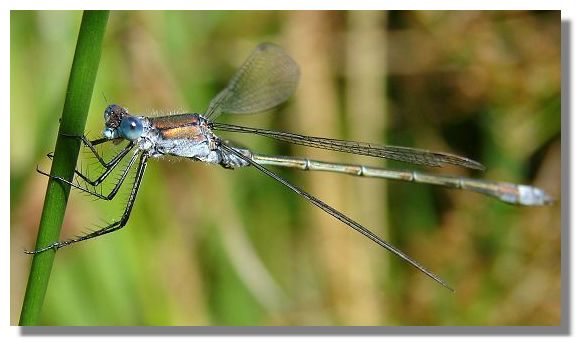
- damsel fly (that was greener, with a blue tail; I didn't know that they can bend the segments of their tails into curves when upset (the person holding it had the wings between fingers))
- phragmites australis (an invasive species, totally associated with the Fens, though)
- stinging nettle (edible, but avoid touching until cooked to avoid stings)
- multiflora rose (used as a rootstock for less hardy roses)
- evening primrose (though not in flower when I saw it)
- ground ivy (in the mint family)
- redwing blackbird
- daisy
- honeysuckle
- goldfish (in the victory gardens of the Fens, which are now community gardens)
- dragonfly
- cottonwood (I wonder whether that stuff can be spun. not for the allergic, of course)
- spider mites
- vetch
- baby ladybug
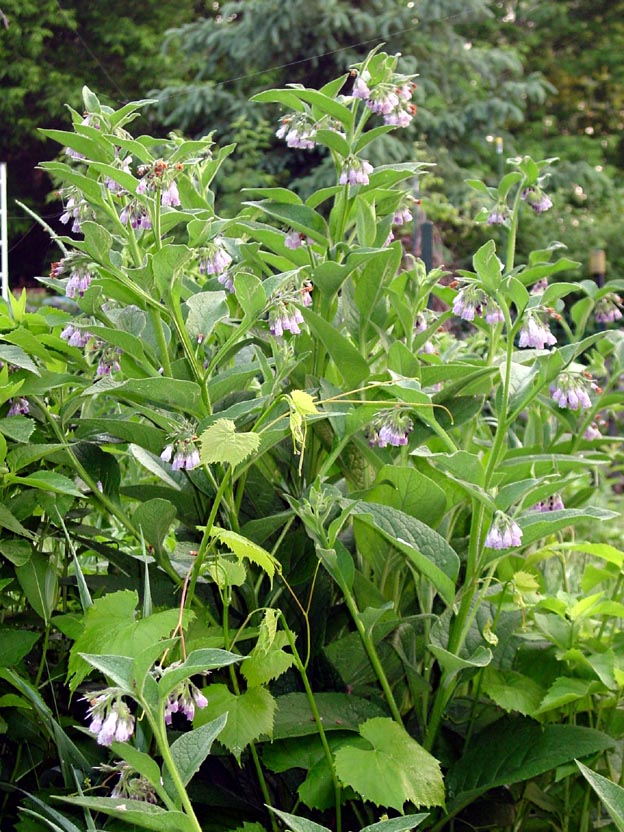
- comfrey
- lamb's quarters (edible, high in vitamin A and something else; I tasted a leaf, and it's nice)
- lady's thumb
- jewelweed (the leader used it to stop the stinging of a nettle)
- leaf miner trails on a leaf
- sedges
- green frog
- lantana
- swallow
- birch
- sow thistle
- pin oak
- purple loosestrife (pentagonal stem)
- belladonna (aka nightshade)
- water hemlock (poisonous; not to be confused with Queen Anne's lace and other carrots)
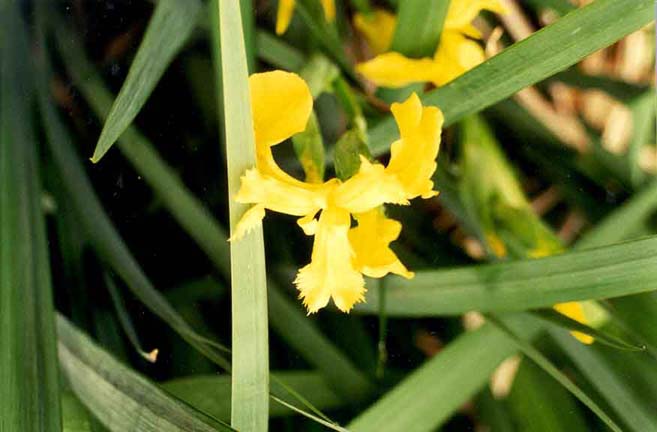
- swamp flag (an invasive yellow iris)
- song sparrow
- slider turtle (likely pets released at the Fens)
- bumblebee (which have fuzzy behinds compared to other similar species)
- inky cap mushroom (the gills are too close together to allow the spores out like other mushrooms, so it eats its own cap from the ouside in, dissolving to let the spores go free)
- cherry tree
- painted turtle (many, many of these sunning themselves, as well as some in the water)
- bull frog (a huge one; they tend to eat the other amphibians that might compete with them)
- an unidentified tree/shrub that reminded me of sumac, but the red flowers weren't fuzzy at all
- mulberry tree
- linden (aka basswood, aka lime flower; a tea can be made from the flowers, and excellent honey is made from it. also, it has neat two-toned leaves)
- grackle
- red maple
- spider that may have been a crab spider
- blackberry (a kind with the berries pointing upward, rather than hiding under the leaves)
- smart weed
- flowering dogwood (edible fruits)
- robin fledglings in a nest
- catbird
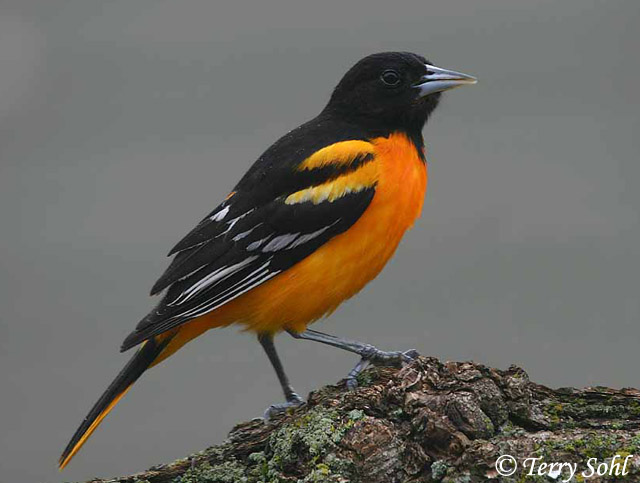
- Baltimore oriole
- cedar (not the kind I'm familiar with, since this had a twisted trunk)
- aphids in a green gall
- irpex lacteus fungus
- ash tree
- hawthorne tree (which has edible fruits)
- lady bug pupa
- snapping turtle
- an intact but abandoned goose egg
- running red mites
I had known that earthworms weren't native to New England, since the glaciers had stripped a lot of stuff off the ground and compacted what was left, but I didn't know that they were brought over as ballast: ships used to use dirt as make-weights, and whatever bugs, etc., were in the soil came along too. These days, ships use sea water as ballast, which can contribute to small sea creatures range expanding (such as the invasive zebra mussel). It'd be great if we could use things that were inert instead.
One dead tree had an area of bark missing. There were black line segments on the white wood, with little curving paths carved into the wood spreading out from each. Some kind of beetle laid eggs in a line, and when they hatched, the little ones burrowed out in all directions. I don't know what kind of beetles they were, but the tracks they left were beautifully geometric. (Check it out here and here.)
I've got a pretty good sense of direction, but the Fens always turn me around. Something about the twistiness is just difficult for my inner navigator, despite grokking Massachusetts roads in general. I hadn't realized there's a war memorial there, nor a rose garden. More exploration is needed!
And wholly off topic: happy Loving Day tomorrow!
![[identity profile]](https://www.dreamwidth.org/img/silk/identity/openid.png)











no subject
Date: 2007-06-11 09:13 pm (UTC)We use a lot of basswood at school - it's soft enough to be really easy to work with, but it's got a much nicer grain than balsa.
Sounds like a fun walk!
no subject
Date: 2007-06-12 12:41 pm (UTC)Good to know about basswood.
It was a very fun walk. There's a guy, Urbpan, who leads walks around metro Boston every month or so (though most everyone else on the walk was pretty knowledgeable, at least compared to me!). There's a Yahoo email list; I've been on for a while but never managed to get myself out for one before.
no subject
Date: 2007-06-12 01:01 pm (UTC). . . You know, I can recall the scent and almost the taste, but I don't know how to describe it. It tasted like floral-flavored plants. *flails* (I also grew up calling the stuff chamomile, but I don't know if that's because it is similar to chamomile in any way or not.)